

The section documents the camera and the conditions during the thermography. Without it, the thermography findings cannot be verified.
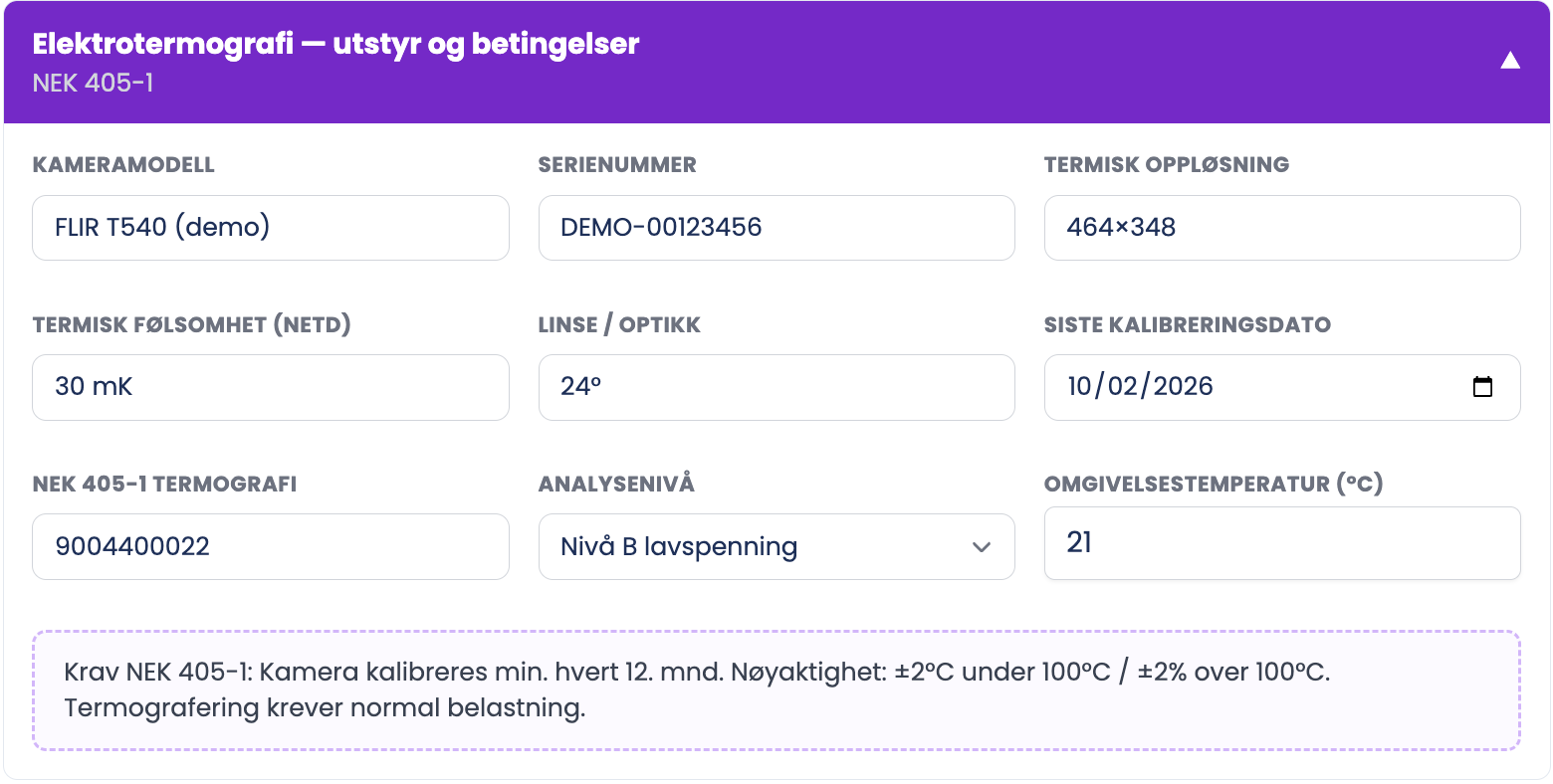
The fields
- CAMERA MODEL, SERIAL NUMBER, THERMAL RESOLUTION, THERMAL SENSITIVITY (NETD) and LENS / OPTICS.
- LAST CALIBRATION DATE.
- ANALYSIS LEVEL: Level B low voltage or Level A (spot check).
- AMBIENT TEMPERATURE (°C) at the time of the inspection.
The camera must be calibrated at least every 12 months. Accuracy ±2 °C below 100 °C and ±2 % above 100 °C. Thermography must be carried out under normal load.
Good to know
- The calibration date is not a formality. If the camera is out of calibration, the measurements cannot be documented, and the findings may be rejected.
- The ambient temperature is used as a reference when temperature differences are assessed. It belongs to the time of the inspection, not to the average for the day.
Tips
- Enter the camera details once, early. They apply to the whole inspection.
- If you thermograph an installation running at low or no load, you cannot use the findings for grading. Agree with the person responsible for operations that the installation is under normal load before you arrive.
- Copy the calibration date from the certificate, not from memory.
What if the installation can't be put under normal load?
Then you thermograph what can be thermographed, and record the rest as not inspected with a reason. See "Non-inspected objects". A thermography finding taken without load says little, and should not be graded as though it did.
Camera details come from your profile
Camera model, serial number, resolution and calibration date are taken from your profile.